


AI is only as reliable as its foundation… foundation models, that is. While these models have become increasingly advanced, hallucination risk remains. As models improve, the risk linked to AI translation and multilingual content generation can become more subtle since errors are more nuanced and harder to detect.
How can someone who is not fluent in the target language trust an AI-generated translation or content? This question is particularly critical in the legal domain, where the potential liability associated with errors is significant and tangible.
There are ways to capture the productivity and efficiency gains of language AI in international legal practice while reducing risk. Expert-in-the-loop review is the first mitigation step that comes to mind.
But there is a trade-off. While trained local legal professionals and specialized linguists can help identify hallucinations, near-equivalents, and unnecessary neologisms, the time and cost of repeated review cycles can offset many of the efficiency gains AI promises.
What if expert involvement occurs earlier, in the data layer and before content generation begins? What if a structured, reliable source of multilingual legal data could reduce risk upstream? Not a glossary. Not a translation memory. But comprehensive, expert-validated legal data designed for cross-jurisdictional use. Let us look at how this works.
How to make AI effectively legal
In legal translation and content generation, fluency alone is insufficient. Cross-border legal work requires jurisdiction-aware equivalence, i.e., alignment with how a concept operates within a specific legal system.
One-to-one term correspondences, as found in glossaries or bitexts, rarely capture local statutory context, scope limitations, or practical consequences. Translation memories may contain inconsistencies or legacy errors. As a result, output may use the correct label while reflecting a different scope, function, or liability profile.
General-purpose models optimize for fluency and predictability. They do not inherently map legal concepts across jurisdictions unless that comparative structure is embedded in the underlying data.
Models trained on generic legal corpora or data scraped from the internet can produce convincing terminology. However, they do not always reflect the deeper conceptual nuances that determine meaning, enforceability, procedural impact, and regulatory treatment. These distinctions often make the difference between minimal correction and extensive redrafting.
Consider the concept of “liquidated damages” in US contract law. Under common law principles, enforceability depends on whether the clause represents a genuine pre-estimate of loss rather than a penalty. In civil law jurisdictions, on the other hand, a superficially similar clause may operate under different statutory rules or judicial standards, including varying degrees of court adjustment.

An AI system relying on surface-level term matching may generate a plausible translation of “liquidated damages”. Yet the functional consequences, i.e. enforceability thresholds or judicial discretion, may differ greatly.
AI cannot eliminate jurisdictional differences. However, when supported by structured comparative legal data that includes definitions, contextual notes, and graded equivalence, it is more likely to produce outputs reflecting those differences accurately from the outset.
Clear and consistent legal language is critical from the start. To support this with AI, the underlying legal data must reflect jurisdiction-specific realities. This is the role of structured, continuously updated, expert-reviewed multilingual legal datasets such as those provided by TransLegal.
Legally reasoning AI
Users integrate TransLegal’s structured legal dataset to enhance model performance and provide geo-adapted legal equivalence across multiple jurisdictions, including low-resource legal terms and non-identical correspondences.
TransLegal’s experts-in-the-loop are both legal and linguistic professionals who verify and approve each term.
“The advantage of an expertly curated dataset goes beyond precision to enable models to generate or translate content at scale across numerous jurisdictions. Providing models with TransLegal’s data makes multilingual legal content accessible with an unprecedented level of accuracy and trust.” — Michael G. Lindner, TransLegal Founder
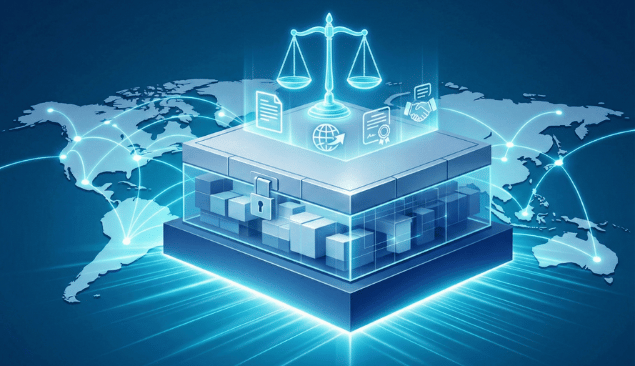
TransLegal’s resource is not a simple lookup tool. It is a structured legal database that can be integrated into retrieval-based AI architectures tailored to specific jurisdictions. By grounding models in comparative legal information, vendors and legal teams can improve consistency and reduce avoidable conceptual drift.
The objective is not to replace legal expertise, but to provide a more reliable starting point for multilingual legal reasoning, drafting, and analysis.
“The value of AI in legal contexts lies not in identifying lexical counterparts, but in reflecting functional equivalence in context. TransLegal’s structured comparative legal data, which includes definitions, explanatory notes, and equivalency gradations, facilitates this.” — Michael Krallmann, PhD, TransLegal CEO
This infrastructure is designed to serve as a foundational legal data layer for legal tech companies, legal publishers, law firms, and Language Solution Integrators operating across jurisdictions.
Explore TransLegal’s multilingual legal dataset to see how jurisdiction-aware legal data can support more reliable cross-border AI applications.