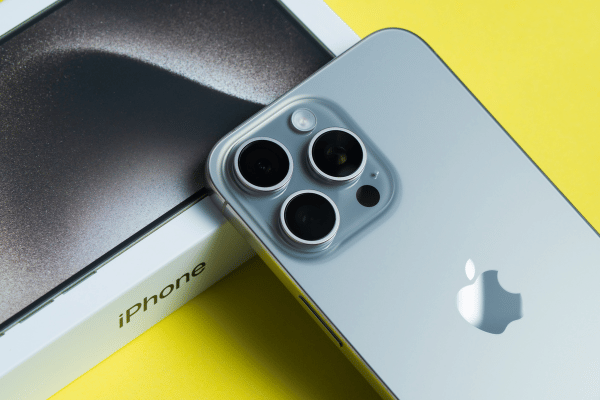
Officially, users can expect to see this on-device, local model translation feature from July 2025 in beta mode, and officially in September 2025, when Apple will launch its “re-nomenclated” OS 26. A range of 8-17 languages shall be integrated by then into Messages, FaceTime, and Phone, with more to come later.
We asked readers what their thoughts are on Apple’s on-device live translation, and to a little less than half of respondents (43.8%), it seems important. Two groups are split about it being a huge deal or nothing special (21.9% each), and the rest think the news can be ignored (12.4%).
Et Tu, Google?
Continuous updates to Google Search functionality are turning it into something very different than the algorithm-based king of search engines people have known for so long. Most people have a hard time explaining exactly how it works, and in June 2025, Google sparked considerable debate among publishers and SEO specialists because of AI translations popping up in AI search summaries.
Contrary to its previous guidance to avoid auto-translating content for fear of creating poor quality content, in the second quarter of 2025, Google effectively began to translate English-language webpages into over 40 languages within AI Overviews. Translated results are effectively delivered via Google subdomains, prompting concerns that it is keeping traffic within its own ecosystem and potentially siphoning clicks and views away from original content publishers.
While Google asserts that “opening a page through a translated result is no different than opening the original search result through Google Translate,” some SEO experts argue this is a form of “publisher disintermediation,” where content creators lose valuable traffic, behavioral data, and potential revenue.
At time of writing, content publishers must actively opt out of this automatic translation feature. Those without robust localized content are identified as particularly vulnerable, risking reduced visibility and control unless they somehow adapt.
We asked readers how they see Google’s move, and nearly 1 in 2 (41.1%) want it to stop. Close to a quarter of respondents consider it bad for creators, and opinions are split among the rest, with one cohort believing it good for users and the other seeing it as fine only if publishers get credit (17.9% each).
A YouTube Goof
Google owns YouTube, where 80 million channel content owners can find their videos automatically AI-dubbed by the platform and left in draft mode for them to publish. Or not. This broad rollout has encountered considerable backlash from both creators and viewers since its initial launch in December 2024.
Criticisms include that the dubs are “absolutely ruining the videos,” that the voices sound emotionless and “robotic,” “cringe,“ or even “funny.” Having tested the quality of these “forced” AI autodubs on episodes of SlatorPod in June 2025, the agreement internally is that the quality is poor and those videos should not be published.
In fact, YouTube’s AI dubs leave a lot to be desired. It is not just the quality of the voices, but also the translation itself. When errors are spotted because the channel owner happens to be fluent in the dubbed language, the translation cannot be edited, nor the dubs re-rendered. Additionally, the same robotic voice is used regardless of who is speaking.
Slator 2025 Language Industry Market Report
The 150-page report offers a comprehensive view of the 2025 global market — with market sizing, AI capability breakdowns, buyer insights, use cases, survey data, and projections through 2030.
The functionality, initially piloted with creators in YouTube’s Partner Program, automatically generates dubbed audio tracks for both Shorts and Video-on-Demand (VOD) content upon upload. And if creators do publish the dubbed videos, viewers are then automatically defaulted into an audio track based on their language preference and watch history.
Creators, in particular, are expressing frustration, with many asking for access to YouTube’s Multilingual Audio (MLA) tool so that they can upload their own high-quality dubbed audio tracks. Just like with the auto-translated search engine results summary, creators and publishers naturally want control over their content’s translated versions.
A browser extension is available to stop YouTube from automatically dubbing videos, though. It is called “YouTube No Translation” and it is available for Chrome and Firefox. Safari users can go to GitHub and build one themselves.
About YouTube’s AI dub decision, close to half of readers (43.8%) find it reckless. A little over a third (31.3%) see it as something inevitable, 1 in 7 (15.6%) think it is great news, and the rest think it is a bold move (6.2%) or just do not care (3.1%).
High Bets, High Stakes
The write-assist platform known as Grammarly secured an astonishing USD 1bn in funding from General Catalyst’s Customer Value Fund in May 2025. The capital injection stands out because it is structured as a loan or credit line with capped returns tied to revenue, rather than a traditional equity stake.
Unconventional financing aside, as of the end of Q2 2025, Grammarly was profitable, with an annualized revenue of over USD 700m and an individual user base estimated at 40 million.
The expectation is that access to capital of this magnitude will transform the 16-year-old company as it shifts “from being what is mostly known as a single-purpose agent to being an agent platform,” according to Grammarly CEO Shishir Mehrotra.
The financing strategy, described by podcasters from “This Week in Startups” as keeping things in the family by loaning money rather than relying on external banks, offers a unique benefit to General Catalyst by increasing the company’s value while providing a return on capital.
We were curious about just how many of Slator Weekly readers use Grammarly, and it turns out that over half (51.7%) have never used it. On the other hand, a quarter of readers (25.0%) use it all the time. About 1 in 6 (13.3%) use it sometimes, and the rest (10.0%) rarely use it.