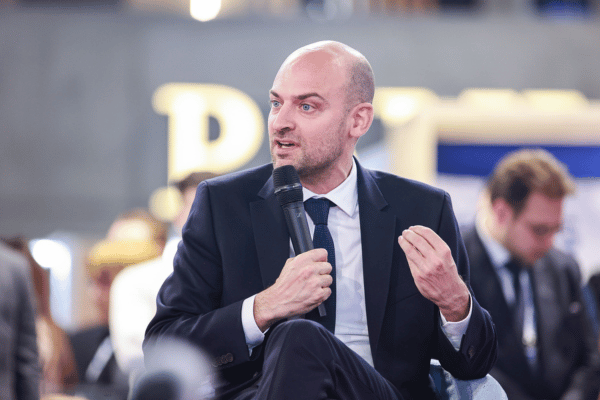
Virginie Rozière, Digital Director at the Ministry, stated for AP that there is no chatbot in the system because agents had not expressed a need for one in their day-to-day duties.
She added that the project “was not about simply diving into tools without thinking things through beforehand… It makes [the agents’] lives easier: they already have linguistic and translation skills to do their jobs, but this way they can concentrate more on proofreading and quality control.”
Slator 2025 Language Industry Market Report
The 150-page report offers a comprehensive view of the 2025 global market — with market sizing, AI capability breakdowns, buyer insights, use cases, survey data, and projections through 2030.
International AI Running on Local Models and Servers
Rozière reflected proudly in a LinkedIn post about the DiploIA system as a success that the DNUM teams achieved in less than a year.
She wrote that the system is “the result of a pragmatic approach that starts from the specific needs of users to provide them with AI solutions that optimize quality of service and guarantee a high level of security while controlling costs and limiting the environmental footprint.”
DiploIA’s structure prioritizes data security and strategic data sovereignty, to ensure that all sensitive information remains within the ministry’s own secure confines in order to mitigate risks like data leaks and AI biases, stated the AP article.
The Ministry leverages two in-house data centers, upgraded with graphic processors, to run the AI tools. This ensures that “no content transits through external platforms,” Rozière emphasized. “By mastering our tools, we also master the risks: data leaks, hallucinations, biases… We anticipate them by making data security a priority.”
Fabien Fieschi, French Ambassador to Croatia, showed his appreciation on LinkedIn, thanking the DNUM for “giving us access to AI tools in a controlled environment adapted to the sensitivity of some of our data!”
Looking ahead, the Ministry plans further system enhancements, including an automatic summarization/synthesis tool by the end of 2025. In the long run, the plan is to integrate specialized “diplomatic language” into the system, an effort that will require specialized model training over several months with diplomat feedback.